
South America in Global Mode


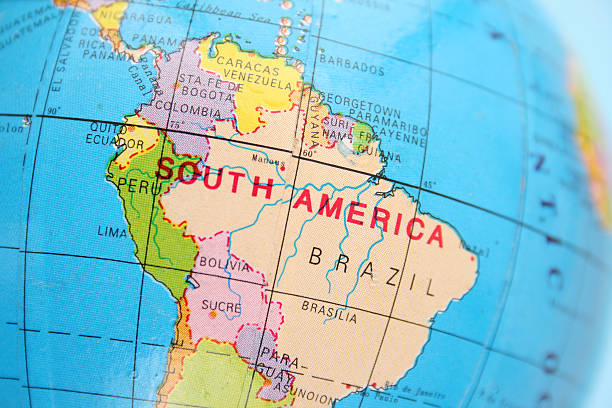
South America is experiencing a regional renewal that is redefining international education for Peruvians: it is no longer just a matter of “going far”, but of choosing smarter routes that combine academic quality, financial sustainability, employability and a purposeful international experience. In this new scenario, international education is increasingly like a strategic decision, where “destiny” matters, but the outcome matters more.
The findings of the QS 2025 ecosystem point to the same thing: international students are making decisions with greater criteria for return. In practice, the question is no longer “what country do I dream of going to?” , but “what option offers me the best conditions to grow academically and professionally, build networks and sustain the total cost of the experience without compromising my stability?”
Today, the choice of international studies is being driven by much more specific factors than before. The cost of living ceased to be a detail and became a decisive filter, while employability, access to practices, connection with industry, networks and real employment options weigh more and more. Added to this is the importance of a comprehensive experience, where student support, well-being and sense of belonging influence as much as academic quality and institutional reputation; not because of empty prestige, but because of the opportunities it enables. Together, these factors form a clear pattern, international education is being evaluated as a personal investment project, with expectations of measurable returns.
Because the world is changing and the region is responding with more accessible and flexible alternatives for those seeking internationalization. On the one hand, regional alliances and routes, exchanges, short programs, research stays and academic networks are being expanded within Latin America, which reduce friction and allow for significant experiences with more manageable costs. On the other hand, hybrid models are growing, combining online training with short face-to-face stays and cumulative credentials, allowing internationalization without having to “move” for years. Finally, more and more students are building their global profile in stages, through microcredentials, intensive courses, projects with international partners and brief face-to-face experiences, opening a powerful door for Peruvians who want to move forward without completely pausing their working lives.
In this context, three routes tend to be especially efficient. The first is regional mobility with impact, ideal for those looking for a solid international experience and academic networks, without incurring extreme costs. The second is the hybrid route, which is usually the best in cost/benefit when flexibility is needed, part of the program is taken remotely and is complemented by a short face-to-face stay and an applied component. The third is the “employability-first” route, designed for those who prioritize global employment and choose programs connected to industry, practices and realistic conditions for professional transition.
Before applying, it is worth validating the real total cost, not just tuition, but housing, insurance, food and transportation, as well as a clear employability plan that includes practices, networks and access to industry. It is also key to review student support (including financial guidance), evaluate if the face-to-face or hybrid format is compatible with your time in life and, finally, ensure that the credential is recognizable and “portable”, that is, that it has value in multiple markets and allows you to build a sustainable international trajectory.
Summary: Regional renewal is not just a trend, it's a concrete opportunity. Today, as Peruvians, we are at an ideal time to build international education with strategy, taking advantage of hybrid routes, regional alliances and decisions guided by results. Because, in the end, the global is no longer a place to be reached, it is a path that is designed with intention.
Bibliographic sources:
- QS Quacquarelli Symonds. Global Student Flows Report 2025/International Student Survey insights (2025).
- UNESCO. Statistics and analysis on international student mobility and recent trends.
- OECD. Education at a Glance and publications on the profile and trends of internationally mobile students (recent editions).
- QS. Reports and rankings from Latin America and the Caribbean as a reference for positioning and regional ecosystem.

